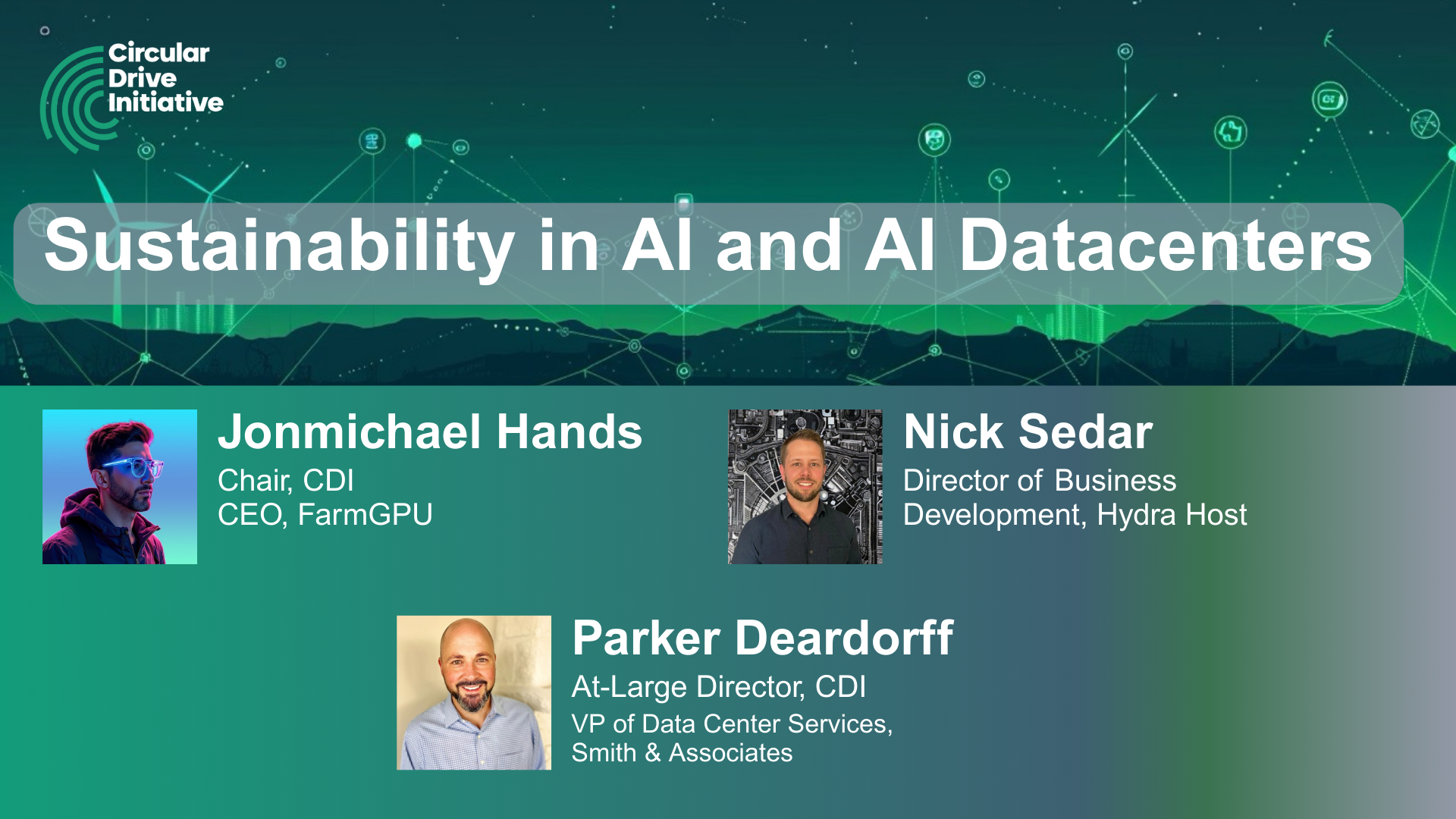
As AI adoption accelerates, the infrastructure behind it is changing just as fast. In a recent Circular Drive Initiative (CDI) panel discussion, industry leaders from FarmGPU and HydroHost explored how AI data centers are being re-architected, and what that transformation means for sustainability, hardware reuse, and long-term value creation.
AI Data Centers Are Built Differently
AI workloads, including training, inference, and fine-tuning, have fundamentally altered data center design. GPUs now dominate capital expenditures, driving rack densities from the historical 5–20 kW range to 40–120 kW and beyond. This shift makes liquid cooling, high-speed networking, and memory-intensive architectures essential rather than optional.
While storage remains critical to AI workflows, it represents a much smaller percentage of bill-of-materials cost in GPU-centric systems than in traditional enterprise servers. That shift has implications for how infrastructure investments are prioritized—and how sustainability strategies must adapt.
Hyperscalers, Neoclouds, and the Long Tail
Today’s AI ecosystem includes hyperscalers, fast-growing neoclouds, and a long tail of enterprises and developers that need flexible access to compute. Hyperscalers account for the majority of GPU spending, but neocloud and bare-metal models are filling an important gap. These approaches support sovereign AI, private AI workloads, and faster market entry without massive upfront investment.
This diversity of deployment models also creates new opportunities to extend hardware lifecycles and enable secondary markets for AI infrastructure.
Hardware Lifecycles and the Circular Opportunity
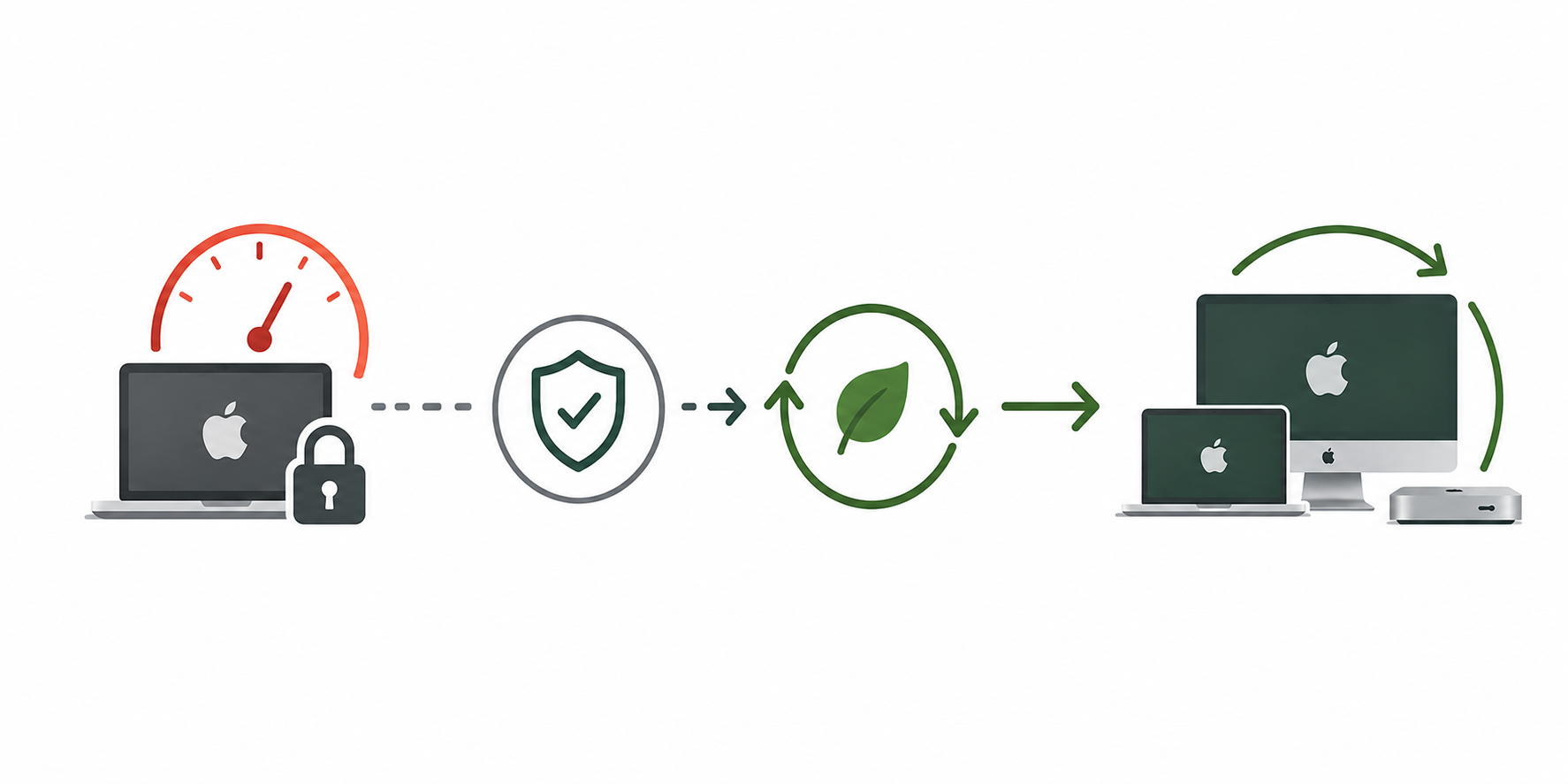
Despite rapid innovation cycles, AI hardware is not instantly obsolete. GPU servers often remain economically viable for five to six years, with second-hand markets supporting testing, inference, and cost-sensitive workloads. This mirrors long-standing practices in storage reuse and highlights an important opportunity: designing AI infrastructure with reuse, redeployment, and resale in mind from the start.
For organizations focused on sustainability, these extended lifecycles can improve return on investment while reducing embodied carbon.
Why CDI’s Work Is More Relevant Than Ever
While near-term AI growth is often prioritized over sustainability, circular approaches remain critical for long-term success. Designing AI infrastructure for reuse—particularly storage and compute—can reduce environmental impact while supporting scalable, resilient AI deployments.
As the panel discussion reinforced, solving circularity challenges in storage has historically been one of the hardest problems in IT. Applying those lessons to AI infrastructure could unlock broader sustainability gains across the entire data center ecosystem.
Click HERE to watch the panel discussion.